Overview
In the late nineteenth century, Japan urgently developed its coastal defense capabilities to establish itself as a modern nation that could stand against Western powers. The government launched a national project to develop four natural harbors into naval bases. Sasebo was selected as one of these harbors, and the Sasebo Naval District was established in 1889. Sasebo Fortress (an Army artillery battery) and a network of Navy Defense Corps and Safety Security Force artillery facilities were constructed along with the Naval District to protect the harbor from enemy landing forces and aircraft. Under the protection of these facilities, Naval District administrative buildings and Marine Corps training facilities proliferated around the harbor. The district and its surrounding facilities profoundly shaped the urban layout of present-day Sasebo.

The Army constructed Sasebo Fortress to defend Sasebo’s naval base. By 1901, a cluster of fortress artillery batteries was in place at the entrance to Sasebo Bay, with the fortress headquarters and artillery regiment situated within the city. The fortress gradually lost its importance as the Japanese military’s strategic priorities shifted from defense to offense. The fortress fell into disuse and was integrated into Nagasaki Fortress in 1936.
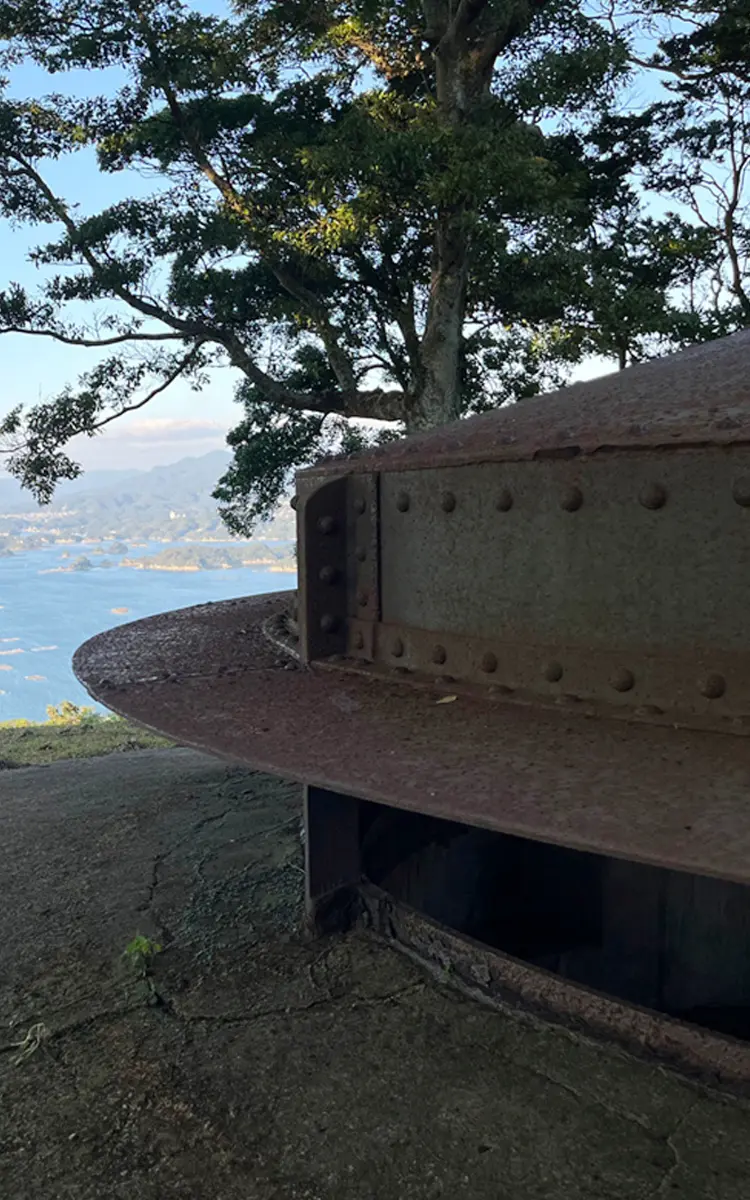
The Marudeyama Fort was designed for prolonged artillery engagements against approaching enemy warships, serving as one of the principal artillery batteries of Sasebo Fortress. It was equipped with four 24-centimeter cannons for direct fire and four 28-centimeter howitzers for high-angle fire. Of these, the armored cover protecting the observation post responsible for directing fire for the 28-centimeter howitzers (observing the distance to enemy vessels and shell impact points and relaying information to the battery) is now a rare relic that can only be found here and at the Yura Fortress Tomogashima No. 1 Battery in Wakayama City.

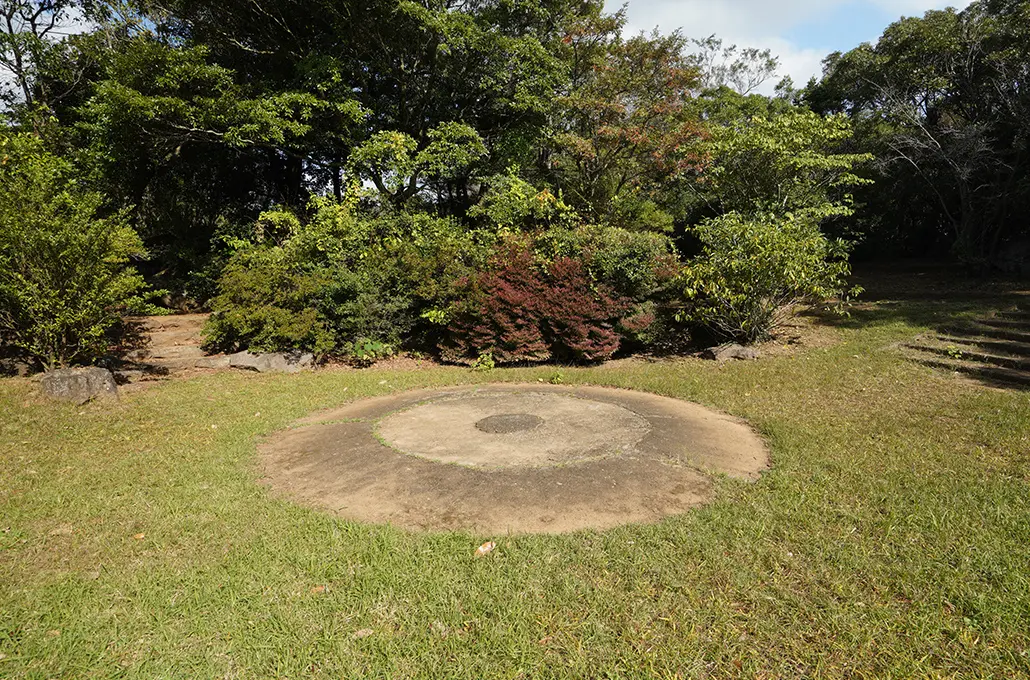
Aircraft, which had been first deployed in combat during World War I, continued to advance rapidly and became a threat to warships and cities. In 1924, the Sasebo Naval District conducted its first exercises simulating air raids. During these exercises, a temporary anti-aircraft gun emplacement was installed atop Mt. Yumihari, which overlooks the naval district. This battery was subsequently used for training in anti-aircraft combat. Then, when the Second Sino-Japanese War broke out in 1937, anti-aircraft batteries were built at 12 locations including that on Mount Yumihari. Toward the end of World War II, from June 1944, this battery was significantly upgraded with the addition of two Type 98 10-centimeter twin-mount high-angle gun turrets, one Type 4 Model 1 anti-aircraft fire radar unit, and other state-of-the-art equipment. This coincided with the advance of American Army B-29 heavy bombers into mainland China, and it is considered the earliest domestic example of an anti-aircraft battery specifically equipped to counter B-29s. The Mt. Tajima anti-aircraft battery fought fiercely against subsequent air raids, and during the June 29, 1945 air raid on Sasebo, it fired 139 rounds across 14 radar-directed engagements. Today, the radar site, gun emplacements, command post, ammunition storehouse, and other facilities remain in good condition, providing a clear picture of the anti-aircraft battery’s layout at the time.
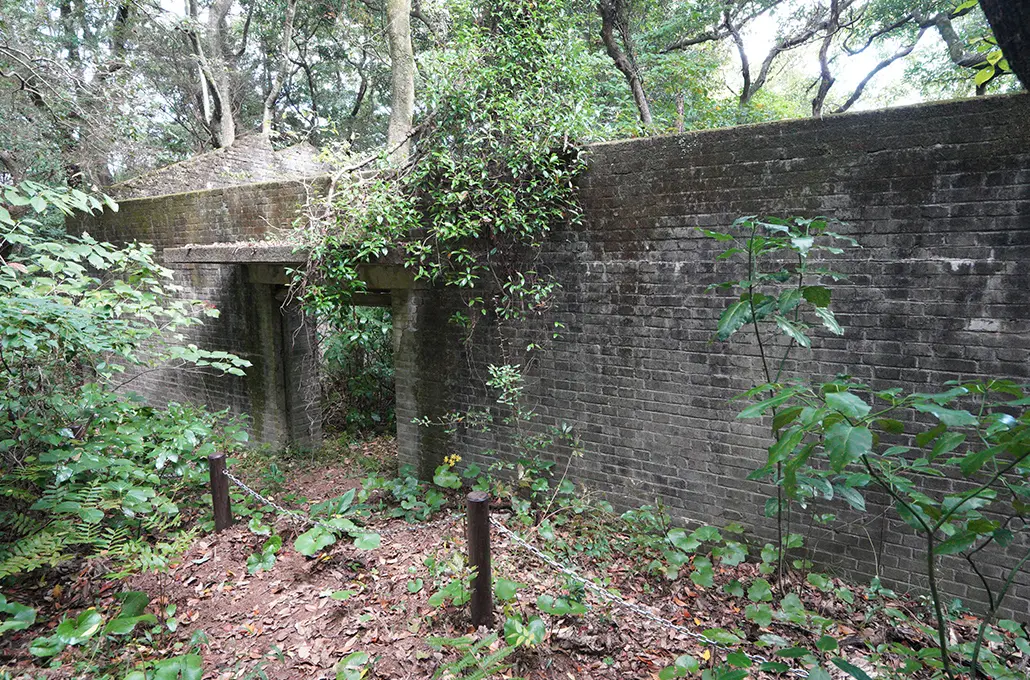

The former Sasebo Naval District Archive Building is located in the Imabuku neighborhood of Sasebo. The neighboring Yatake Reservoir (built in 1889) was part of the former Sasebo Naval District Waterworks, the oldest water supply system in Kyushu. The Archive Building served as the Naval District’s record-keeping headquarters, storing all the district’s classified technical drawings and official documents.
The archive was completed in December 1937 and was expanded in March 1939. The reinforced-concrete structure has two stories above ground and one below, for a total floor area of 779.19 square meters on a building footprint of 136.18 square meters. The reinforced concrete rigid frame is strengthened by shear walls and earthquake-resilient, haunched beams. The pillars are also connected to many shear partition walls, allowing the structure to withstand massive stress from external forces. The basement level includes a lightwell that provides daylight, ventilation, and prevents moisture buildup—a rare architectural detail among pre-WWII Japanese buildings.
ARコンテンツ制作協力:「横浜旧軍無線通信資料館」


令和7年度 文化資源活用事業費補助金(文化財多言語解説整備事業)



 お問い合わせ